2025 Mainland Second-Hand Luxury Market Insights: How Chanel Became the "Hard Currency" of the Secondary Market

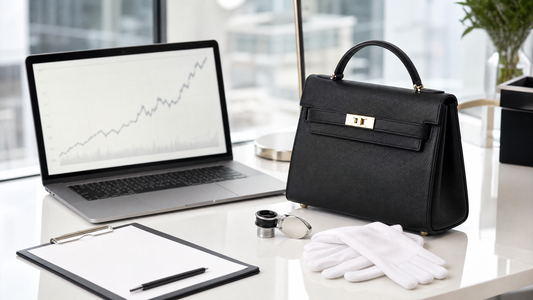
Hello everyone, I am Shiken, President of the Asia Luxury Association (ALA). Recently, we have observed very clear trends in the mainland second-hand luxury market for 2025, which hold immense reference value for our fellow dealers in Hong Kong, Japan, and Southeast Asia. According to the latest data, the total transaction volume of the mainland second-hand luxury market in 2025 is expected to reach between 34.8 billion and 138 billion RMB, a year-on-year increase of about 17.6%, bucking the trend and outperforming the primary market. The core driving force behind this is the rise of Gen Z consumers.
We found that second-hand items account for a staggering 32% of Gen Z's wardrobes, far exceeding the overall average. Even more noteworthy is that about 80% of Gen Z consumers first experience and try a luxury brand through second-hand channels. This means the second-hand market is no longer just a place to dispose of old items, but a crucial arena for brands to acquire new customers and build brand awareness. The logic of consumption has also fundamentally shifted: "checking the second-hand price before buying a bag" has become a habit for nearly half of mainland consumers. Value retention is no longer a "bonus" but a "must-have." This indicates that the pricing power of the second-hand market is inversely influencing primary purchase decisions, effectively making us second-hand dealers the arbiters of a brand's value retention narrative.
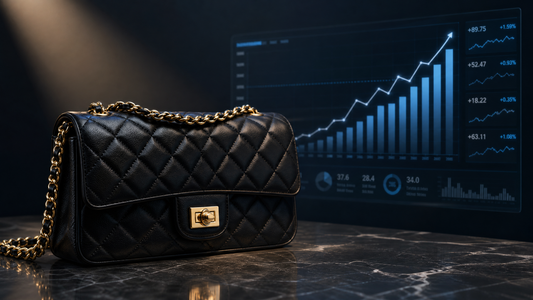
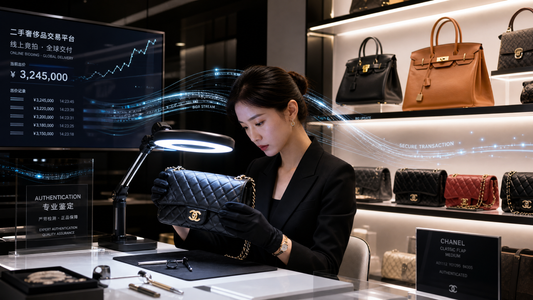
Among all brands, Chanel stands out the most. In 2025, Chanel's brand value surged by 45.4% year-on-year to reach 37.9 billion USD, surpassing Louis Vuitton for the first time to become the world's fastest-growing luxury brand. Take the Classic Flap Medium as an example: priced at 29,800 RMB nine years ago, its secondary market circulation price has now risen to 84,000 RMB, an average annual increase of about 8%, outperforming most financial products. The value retention rate of Chanel's classic models in the secondary market has remained stable at 85% to 90% for years, making it the absolute king with dual attributes of investment and social currency.
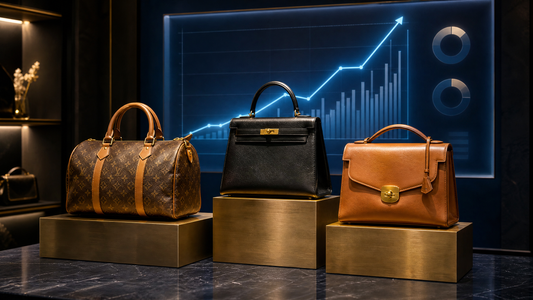
Besides Chanel, hard luxury (jewelry and watches) has also outperformed soft luxury. During periods of economic fluctuation, consumers lean towards asset-based consumption. Classic models from brands like Cartier and Van Cleef & Arpels have become benchmarks for value retention due to their extremely low second-hand depreciation rates. Hermès's Birkin consistently commands a premium in the second-hand market, maintaining high profit margins. While Louis Vuitton's brand value growth may not match Chanel's, its massive market presence and social recognition ensure it remains the brand with the strongest liquidity in the second-hand market, making it the easiest option for consumers to buy and sell. Conversely, soft luxury brands overly reliant on logo premiums and youth trends, such as Gucci, face higher depreciation rates in the second-hand market, reflecting consumers' strict screening for value retention.
For our fellow second-hand luxury dealers in Asia, these trends offer three key operational insights. First, inventory structure should concentrate on Chanel classic models and Hermès core models, as they offer the strongest liquidity and price support. Second, Louis Vuitton is highly suitable as turnover inventory; we should rely on its transaction speed rather than per-item profit margin to win. Finally, for logo-driven soft luxury brands, we must tighten acquisition prices and inventory age management to avoid locking up capital during market downturns. I hope these insights help everyone seize opportunities and grow steadily in the 2025 market.
Want more in-depth analysis of the Asian second-hand luxury market and industry resource matching? Visit the Asia Luxury Association website at aisaluxassoc.com now and seize industry opportunities with us!