Decoding The RealReal's Q2 Earnings: What Asian Vintage Dealers Can Learn from the North American Resale Giant

Hello fellow industry professionals, this is Shiken. As the President of the Asia Luxury Association (ALA) and the operator of a Chanel vintage shop in Hong Kong, I spend my days not only managing my store and attending to clients but also closely monitoring the macroeconomic trends of the global luxury resale market. Recently, The RealReal, the largest luxury resale platform in North America, released its financial report for the second quarter of 2026. This report is far more than just a collection of cold numbers; it conceals profound trends shaping the entire industry. Today, I want to break down this earnings report from the perspective of an Asian vintage industry insider and explore the insights it offers to our peers in the region.
First and foremost, the most striking data point is undoubtedly The RealReal achieving a record-breaking Gross Merchandise Value (GMV) of 617 million USD in the second quarter, representing a remarkable 22% year-over-year growth. This marks their fourth consecutive quarter of GMV growth exceeding 20%. Against the backdrop of a global economic environment fraught with uncertainty, such a rapid growth rate undoubtedly injects a strong dose of confidence into the entire luxury resale market. It proves that consumer acceptance of pre-owned luxury goods continues to rise, and the concept of the circular economy has deeply taken root among mainstream consumer groups. For us practitioners in Asia, this is incredibly encouraging, indicating that the sector we are in still brims with immense potential and vitality.
However, more than the growth in overall scale, I am particularly focused on another core metric: the Average Order Value (AOV). The report shows that The RealReal's AOV jumped by 13% to reach 659 USD. This is a fascinating data point because it aligns perfectly with our actual experiences in the Hong Kong and Japanese vintage markets. In our daily store operations, we clearly feel a polarization occurring in the market. On one hand, high-end, rare vintage pieces in excellent condition, such as classic Chanel flap bags or rare Hermès leather goods, remain highly sought after. Buyers are willing to pay significant premiums for these core assets that hold or even appreciate in value. On the other hand, entry-level items in average condition are facing greater sales pressure. The rise in The RealReal's AOV precisely reflects this shift of buyers gravitating towards higher-priced, higher-quality goods. This reminds us that in our future sourcing strategies, we must focus more on precision rather than sheer volume, increasing the proportion of high-net-worth items to maintain a competitive edge.
Let's also look at the profitability model. The RealReal's gross margin for this quarter reached an impressive 74.4%, largely driven by the steady growth of its consignment revenue. The structural advantages of the consignment model are fully displayed here. Compared to the traditional direct buyout model, consignment significantly reduces a platform's inventory risk and capital tie-up. For many small and medium-sized vintage shops in Asia, capital turnover is the lifeblood of survival. While we may not be able to build a massive consignment network like the industry giants, we can consider how to appropriately introduce or optimize consignment mechanisms within our businesses, or establish more flexible collaborative sales models with peers, to alleviate our financial burdens and enhance our resilience against risks.
Nevertheless, this earnings report also sounds an alarm for us. Despite the record-high GMV and stellar gross margins, The RealReal still recorded a GAAP net loss of 27 million USD. This serves as a profound reminder to everyone in the industry: scale absolutely does not equal profitability. The operational costs of running a massive luxury resale platform—encompassing logistics, warehousing, authentication, customer service, and customer acquisition—are astronomically high. For independent vintage shops and regional platforms in Asia, blindly pursuing scale expansion is dangerous. We should instead focus on unit economics, customer retention rates, and operational efficiency. A robust cash flow and a sustainable business model are always more important than superficial revenue figures.
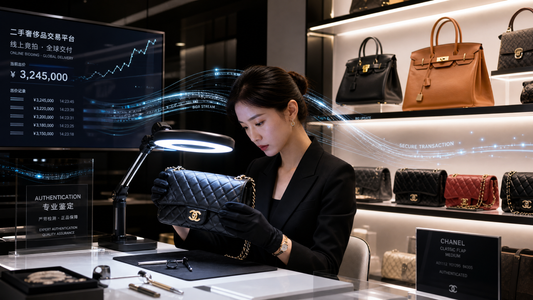
In terms of operational efficiency, The RealReal's application of technology is highly worthy of our emulation. They explicitly stated that technology remains the core of their operations, utilizing proprietary tech, AI, and machine learning to support pricing and processing workflows, complemented by expert-led authentication procedures. This dual-track approach of "AI assistance plus expert gatekeeping" is an effective way to address the pain points of non-standardization in the luxury resale industry. In Asia, we possess incredibly rich authentication experience and professional talent, but we are often constrained by the efficiency bottlenecks of purely manual operations. If we can gradually introduce technological tools—such as using databases to assist with pricing or employing image recognition technology for initial screening—we can allow our authentication experts to concentrate on the most critical and complex tasks, thereby significantly boosting overall processing capacity and accuracy.
Finally, The RealReal's success in the North American market further solidifies my confidence in the Asian market. Asia possesses unique advantages: we have mature supply hubs with abundant inventory like Japan and Hong Kong, alongside massive and rapidly growing demand centers like mainland China and Southeast Asia. The current challenge lies in the information barriers and trust gaps that still exist between these markets. This is precisely the original intention behind establishing the Asia Luxury Association (ALA). We hope to build a bridge that connects industry peers across regions, establishes unified industry standards, and facilitates the efficient matching of supply and demand.
In conclusion, The RealReal's Q2 earnings report is not just a milestone in their own development; it is a weather vane for the entire luxury resale industry. From it, we see the continuation of the premiumization trend, the advantages of the consignment model, the tug-of-war between scale and profitability, and the future of technological empowerment. I hope these observations provide some inspiration for my fellow industry professionals. Let us move forward hand in hand to jointly promote the prosperity and advancement of the Asian luxury resale market.
Looking for more in-depth analysis of the Asian luxury resale market and industry networking opportunities? Visit the Asia Luxury Association website at aisaluxassoc.com and join us in elevating the industry.